
Freeman Cherng
Canny is the Featurebase alternative focused on feedback
Featurebase is a per-seat support suite with a feedback module. Canny is a feedback platform that captures requests from the support, sales, and call tools you already use and ties them to revenue. Featurebase launched as a cheaper Canny alternative, but its 2026 pivot to support changed both the product and the pricing.
Canny is built entirely around customer feedback. If you need to capture feedback from your existing tools, or want your whole company involved in prioritization, Canny is the better fit.
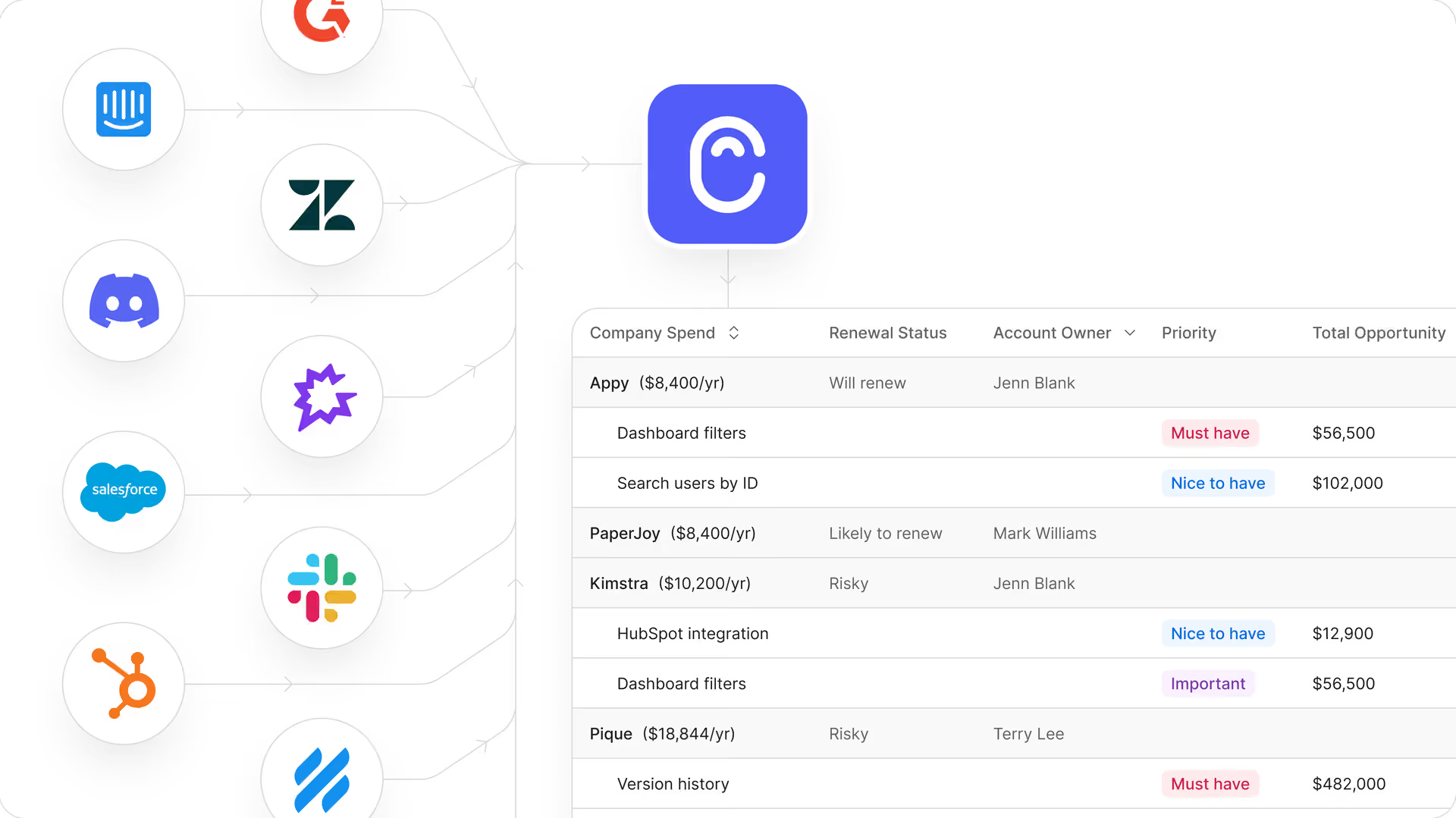







Table of contents
01
Quick look: Why people prefer Canny over Featurebase
02
Canny vs Featurebase: what’s the same and what’s changed
03
Featurebase reads its own inbox. Canny reads yours.
04
Canny vs Featurebase pricing: per seat or per tracked user
05
What integrations does Featurebase have? What about Canny?
06
What types of companies does each help?
07
When Featurebase might be the right choice
08
Switching to Canny from Featurebase
09
Frequently asked questions
Quick look: Why people prefer Canny over Featurebase

Featurebase
Automatic, unlimited feedback capture
Autopilot reads Intercom, Zendesk, Gong, Slack, and review sites, with no usage limits.
Fewer capture sources
Their AI reads call recorders and their own support inbox with a monthly usage allowance.
A structured home for feedback
Canny Ideas organizes feedback into a hierarchy by product area, down to specific features.
Categories by feedback type
Featurebase sorts requests into categories like bugs and feature requests, plus labels.
Pricing per tracked user
Pro starts at $79 a month with 10 admins and unlimited free contributors, and scales with tracked users.
Pricing per seat
Featurebase charges $29 to $99 per seat, with free Lite seats (their version of contributors) only on higher tiers.
A dedicated feedback tool
Canny serves feedback teams from startups through enterprise.
A support suite with feedback attached
Featurebase now focuses on support tools, and you can’t buy its feedback tools separately.
Canny vs Featurebase: what’s the same and what’s changed
Featurebase launched as a dedicated Canny alternative for startups. Its feedback product still resembles Canny’s Portal today. Both offer a portal for customer requests with voting, a public roadmap, and a changelog.
Since then, Featurebase has shifted its focus to compete directly with tools like Intercom. Its homepage now leads with “the complete support suite for your team and AI.”
Canny stayed focused on the problems feedback teams hit as they grow. Autopilot captures feedback nobody has time to file, and Ideas organizes it by product area and feature. Reporting then shows which requests carry the biggest revenue opportunities.
"There’s money associated with each idea now. You know how many accounts are impacted, how much revenue is at stake, and whether it came from a customer or a prospect."

Featurebase reads its own inbox. Canny reads yours.
Canny Autopilot’s AI captures and organizes feedback from customer calls and chats. In September 2026, Featurebase added a similar feedback capture tool and also named it Autopilot.
Both Autopilots read calls from recorders like Gong and Fathom. Beyond calls, Featurebase’s AI reads its own support inbox, while feedback in your Zendesk or Intercom still gets filed by hand. Their AI also runs on a monthly AI-action allowance, and processing pauses when you hit the cap.
Canny reads the support stack you already run. Autopilot captures feedback from Intercom, Zendesk, Help Scout, and Freshdesk conversations, with no usage limits on any plan. It also works with Slack, public review sites like G2 and the App Store, and any text you send it, like an NPS export. If your team already uses Zendesk or Intercom, you don’t need to drop it just to feed a feedback tool.
"Canny’s Autopilot ensures feature requests never fall through the cracks. We’ve seen an 80% increase in requests logged since introducing Autopilot."

Owen Doherty
COO at Orca Scan
Canny vs Featurebase pricing: per seat or per tracked user
Featurebase says teams save a lot by choosing it over Canny. That depends on how many people work in your feedback tool. With one or two admins, per-seat pricing can cost less. Near the 10 admin seats Canny Pro includes, Canny comes out ahead.
Canny prices on tracked users, the people who actually give feedback, rather than on who logs in. That’s usually a small slice (1-5%) of your user base, so Canny Pro starts at $79 a month with every Pro feature, and the price grows with feedback volume, not headcount. Featurebase’s closest plans, Professional and Enterprise, charge $59 and $99 per seat. For a team of 10 admins, that’s $590 or $990 a month. The same 10 admins on Canny Pro pay $279 a month at the 500 tracked-user tier, with unlimited free contributors.
Bring your whole company in for free
Feedback works best when sales, support, and CS all contribute, so every Canny plan includes unlimited free contributors. On Featurebase, anyone who works in the dashboard or files feedback for a customer needs a full or Lite seat, and Lite seats are capped: none on Growth, 20 on Professional, 50 on Enterprise. Add 15 occasional contributors to a 10-admin team and Canny Pro stays at $279. Featurebase Growth needs all 25 as full seats at $725 a month, and larger teams outgrow the caps on higher tiers too.
The support suite raised the price of feedback
Featurebase changes pricing often, nine plan names in five years, and the support launch moved it to strictly per seat. They say the suite comes at no extra cost, but the same team now pays more for feedback. In December 2023, Premium was $82 a month for 8 managers and included SSO. Today admin SSO is on Enterprise at $99 per seat, so those 8 seats run $792. Per-seat pricing fits a helpdesk, where every agent works the inbox all day. For a feedback team, it means paying support tool prices for every product manager who logs in.
What integrations does Featurebase have? What about Canny?
Canny connects to more than 50 tools. Featurebase lists 25 integrations, including six call recorders.
For everyday workflows, the lists overlap. Both sync requests with issue trackers like Jira and Linear, pull customer data from Salesforce and HubSpot, connect to Slack, and offer an MCP server.
Featurebase










Beyond that, Canny Autopilot has far more automatic capture sources.
What types of companies does each help?
Featurebase describes itself on G2 as a platform for startups, and its reviewers are mostly small teams. Reviews from larger companies describe where it starts to strain. Reviewers note that modules feel incomplete, and that innovation goes toward adding new modules rather than improving existing ones. Others cite a lack of automations that makes it hard to scale across a large product portfolio.
Canny works for teams from early-stage startups to larger teams like CircleCI, Jane, and ClickUp. As feedback volume grows, Ideas gives teams a hierarchy by product area, automation rules handle routing, and every request connects to the revenue behind it.
See how ClickUp keeps track of feedback from a fast-growing user base →
When Featurebase might be the right choice
If you’re shopping for a full support suite as much as a feedback tool, Featurebase is worth a look. It has live chat, a shared inbox, a knowledge base, surveys, and Fibi, an AI agent that resolves support tickets. Its pricing works well for teams that only need a couple of admin seats.
Switching to Canny from Featurebase
Already using Featurebase? You don’t have to start over.


We’ll help migrate your feedback, users, and roadmap so you can move to Canny.
See Canny on your own feedback
Start free in minutes, or book a demo to see how Canny captures feedback from your conversations, connects it to revenue, and closes the loop with your customers.
Frequently asked questions
What’s the difference between Canny and Featurebase?
Both offer a feedback portal, roadmap, and changelog. Featurebase sells them inside a per-seat support suite with live chat, a shared inbox, and a knowledge base. Canny is a standalone feedback platform priced on tracked users, with automatic capture from support and sales tools and revenue attached to every request.
Is Featurebase cheaper than Canny?
It depends on your team size and feedback volume. With one or two admins, Featurebase’s per-seat pricing can cost less. Canny Pro includes 10 admin seats and unlimited contributors, so as your team grows, Canny usually comes out ahead. With a very large tracked-user base, Featurebase may be cheaper.
Does Featurebase capture feedback automatically?
Featurebase launched their own Autopilot in September 2026. It captures feedback from call recorders and Featurebase’s own support inbox. When the monthly AI allowance runs out, processing pauses until it resets. Conversations in Zendesk or Intercom still have to be filed by hand. Canny’s Autopilot reads those tools directly.
Do I have to buy Featurebase’s support tools to get its feedback tools?
Yes. Featurebase sells one per-seat subscription covering both suites, with no feedback-only plan. Their seat prices reflect support-agent usage, whether or not you use the helpdesk.
Can I migrate from Featurebase to Canny?
Yes. Our team will help you move your feedback, users, and roadmap.
Contact us to get started on your migration.
How do Featurebase and Canny compare for enterprise teams?
Both reserve enterprise features for their top plans. Featurebase puts admin SSO and opportunity linking (connecting Salesforce opportunities or HubSpot deals to requests) on Enterprise at $99 per seat, so 10 admins run $990 a month before AI fees. Canny puts SSO and CRM integrations on Business, which prices on tracked users and includes at least 10 admin seats, with unlimited free contributors. Canny also scales better as your team and feedback volume grow. Ideas keeps high volumes of feedback organized by product area, and contributor seats are unlimited. Many Canny customers use more than 50, which is the most Featurebase allows on Enterprise.